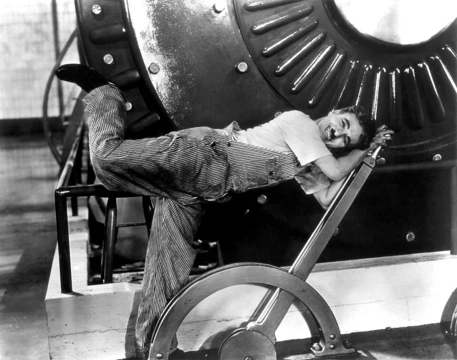
Étienne Decroux
French master of corporeal mime.

via Wikipedia: Physical theatre · see source
Étienne Decroux is the French master who founded corporeal mime, a theatre tradition based on the physicality of the actor. His aim was to create a more metaphorical theatre, allowing the creation of a theatre based on the physicality of the actor. Decroux's work has grown into a tradition now taught in many major theatrical schools.
- field
- Mime, theatre
- nationality
- French
- known_for
- Corporeal mime
Lore & Background
Étienne Decroux's aim was to create a theatre based on the physicality of the actor, allowing the creation of a more metaphorical theatre. This tradition has grown, and corporeal mime is now taught in many major theatrical schools. Daniel Stein, a teacher out of the lineage of Étienne Decroux, has said: 'I think physical theatre is much more visceral and audiences are affected much more viscerally than intellectually. The foundation of theatre is a live, human experience, which is different from any other form of art that I know of. Live theatre, where real human beings are standing in front of real human beings, is about the fact that we have all set aside this hour; the sharing goes in both directions. The fact that it is a very physical, visceral form makes it a very different experience from almost anything else that we partake of in our lives. I don’t think we could do it the same way if we were doing literary-based theatre.' Arguably, the point at which physical theatre became distinct from pure mime is when Jean-Louis Barrault (a student of Decroux) rejected his teacher's notion that the mime should be silent. If a mime uses their voice then they would have a whole range of possibilities open to them that previously would not have existed. This idea became known as 'Total Theatre' and Barrault advocated that no theatrical element should assume primacy over another: movement, music, visual image, text etc. He viewed each element as equally important, and believed that each should be explored for their possibilities.
Reader's Guide
Étienne Decroux's corporeal mime tradition started with the French master himself. Decroux's aim was to create a theatre based on the physicality of the actor, allowing the creation of a more metaphorical theatre. This tradition has grown, and corporeal mime is now taught in many major theatrical schools. A key turning point came when his student Jean-Louis Barrault rejected Decroux's notion that the mime should be silent. Barrault argued that if a mime uses their voice they would have a whole range of possibilities open to them that previously would not have existed. This idea became known as 'Total Theatre' and Barrault advocated that no theatrical element should assume primacy over another: movement, music, visual image, text etc. He viewed each element as equally important, and believed that each should be explored for their possibilities. Barrault was a member of Michel Saint-Denis's company, alongside Antonin Artaud.
Did You Know?
- Étienne Decroux is the French master who started the corporeal mime tradition.
- Decroux's aim was to create a theatre based on the physicality of the actor, allowing the creation of a more metaphorical theatre.
- Corporeal mime is now taught in many major theatrical schools.
- Jean-Louis Barrault, a student of Decroux, rejected his teacher's notion that the mime should be silent, leading to the concept of 'Total Theatre'.
- Daniel Stein, a teacher out of the lineage of Étienne Decroux, described physical theatre as 'much more visceral' than intellectual.
The Father of Corporeal Mime
Among the many roots that feed into what we now call physical theatre, one lineage stands apart for its singular focus on the body as the primary storytelling instrument. The French performer and theorist Étienne Decroux is widely recognized as the father of corporeal mime, a discipline in which the actor's physicality becomes the central language of the stage. Rather than treating movement as an accessory to spoken text or as a secondary layer beneath dialogue, Decroux set out to build an entire theatrical form from the ground up around the expressive potential of the human body. His ambition was not merely to make actors move more convincingly but to open a space for what he saw as a more metaphorical theatre—one in which the body itself could carry symbolic, emotional, and narrative weight without depending on words. In this way, he established a tradition that treats the performer's physical presence as the foundational material from which meaning is constructed, a principle that continues to shape how the discipline is understood and practiced today.
A Living Pedagogical Lineage
Decroux's contribution extends well beyond any single performance or company. The tradition he founded has taken root in the institutional fabric of theatrical education, with corporeal mime now incorporated into the curricula of numerous major theatre schools around the world. This institutional presence ensures that each new generation of performers encounters his principles not as a historical curiosity but as a working vocabulary. One of the teachers who carries this lineage forward is Daniel Stein, who has spoken eloquently about why the physical dimension of theatre matters so deeply to audiences. Stein argues that physical theatre reaches people on a visceral, bodily level in a way that intellectual or literary engagement simply cannot replicate. For him, the live encounter between real human beings sharing a space and a set-aside hour creates a two-way exchange that is fundamentally different from any other art form. In his view, the very physicality of the form is what makes that exchange possible, and it is a quality that literary-based theatre, for all its strengths, cannot fully reproduce.
The Student Who Broke the Silence
No figure illustrates both the reach and the limits of Decroux's framework more clearly than his own student Jean-Louis Barrault. Barrault trained under Decroux and absorbed the conviction that the body could carry a theatre's full expressive load. Yet he ultimately pushed back against one of his teacher's most defining rules: the requirement that the mime remain entirely silent. For Barrault, the moment a performer was permitted to use the voice, an entire new dimension of theatrical possibility opened up—timbre, rhythm, the interplay between spoken word and gesture all became available as expressive tools. This departure crystallized into what became known as Total Theatre, a philosophy in which no single element—movement, music, visual image, text—holds automatic priority over the others. Each is to be explored for its own potential, and none is subordinated to the rest. Barrault's break thus marks a pivotal moment: the point at which the tradition Decroux founded began to split, evolve, and generate its own successors.
A Distinct Tradition Within a Broader Field
Physical theatre is a broad and often loosely defined field, and practitioners and scholars frequently struggle to draw clean boundaries between its many strands. Within that landscape, Decroux's corporeal mime occupies a clearly delineated position. It is distinct from the mime-and-clowning schools such as Jacques Lecoq's Parisian institution, from the strong influence of contemporary dance on physical performance, and from the ancient roots in Commedia dell'arte or Aristophanic comedy that other practitioners trace. It is also separate from the Eastern traditions—Japanese Noh, Balinese theatre, the Butoh movement of Hijikata and Ohno—that have shaped figures like Artaud, Grotowski, Brook, and Suzuki. What sets Decroux's lineage apart is its foundational premise: that the actor's body, trained and disciplined, is not one element among many but the very ground from which the theatre is built. In a field where the label physical theatre is sometimes applied as a catch-all for anything unconventional, Decroux's tradition retains a specific, traceable identity.
Gallery
Frequently Asked Questions
Who is Étienne Decroux?
A French theatre artist who founded corporeal mime, a performance tradition built entirely around the actor's physical body as the primary storytelling instrument.
What makes corporeal mime different from other forms of mime or pantomime?
Decroux designed it to operate on a metaphorical level, using the body's shapes, tensions, and movements to evoke abstract ideas and emotions rather than simply imitating everyday actions or objects.
Where can I learn Étienne Decroux's technique today?
His tradition has been absorbed into the curricula of numerous major theatre schools worldwide, making corporeal mime a standard offering in many contemporary acting programs.
Why does Étienne Decroux belong in a clowning and physical comedy reference?
His insistence on pure, wordless physical expression as the core of theatrical meaning established a vocabulary of bodily storytelling that later physical comedians and clowns continue to draw from.
What was Decroux's nationality and primary field of work?
He was French and worked across mime and theatre, with the creation of corporeal mime remaining his defining contribution to performance art.
More in Clowning & Physical Comedy 1-21
Spotted an error? Know more?
This is a living reference — every entry is fact-audited, and reader corrections feed straight into our audit queue. Suggest an edit · See this site's audit record