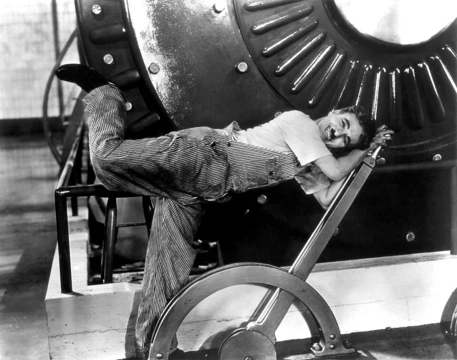
Jacques Tati
French mime and filmmaker known for Monsieur Hulot.

via Wikipedia: Jacques Tati · see source
Jacques Tati (born Jacques Tatischeff; 9 October 1907 – 5 November 1982) was a French mime, filmmaker, actor, and screenwriter. He is best known for portraying the character Monsieur Hulot in his films *Les Vacances de Monsieur Hulot* (1953), *Mon Oncle* (1958), *Playtime* (1967), and *Trafic* (1971). Tati's first three films were made through Cady Films, a production company he co-founded with Fred Orain. He later created Specta Films while making *Mon Oncle*, and after the commercial failure of *Playtime*, Specta Films was placed into administration. Tati then created a new production company, CEPEC, and film rights were later consolidated under Specta Films CEPEC, registered in 1978.
- born
- 9 October 1907, Le Pecq, France
- died
- 5 November 1982
- field
- Mime, filmmaking, acting, screenwriting
- nationality
- French
- known_for
- Portraying Monsieur Hulot in his films
Verified Timeline
Lore & Background
Jacques Tati was of Russian, Dutch, and Italian ancestry. His father, Georges-Emmanuel Tatischeff, was born in Paris, the son of Dmitry Tatischeff, General of the Imperial Russian Army and military attaché to the Russian embassy in Paris. The Tatischeffs were a Russian noble family of patrilineal Rurikid descent. Dmitry Tatischeff died under suspicious circumstances from injuries sustained in a horse-riding accident, shortly after the birth of Georges-Emmanuel. In 1903, Georges-Emmanuel married the Dutch-Italian Marcelle Claire van Hoof (died 1968). Together, they had two children, Natalie (born 1905) and Jacques. Tati was born on 9 October 1907 in Le Pecq. He left school in 1923 at age 16 and trained as a picture framer in the family business. Between 1927 and 1928, he completed national military service with the Cavalry's 16th Regiment of Dragoons. Returning to Paris, he joined the semi-professional rugby team Racing Club de France, where he first discovered his comic talents, entertaining teammates during intervals with impersonations. He also first met Jacques Broido, with whom he became lifelong friends.
Reader's Guide
Tati's career began with music hall engagements, first mentioned in 1935 when he performed at a gala for the newspaper *Le Journal*. His act caught the attention of Max Trebor, who offered him an engagement at the Theatre-Michel, where he quickly became the star act. During the 1930s, he acted in several shorts, including *Soigne ton gauche* (1936), directed by René Clément. In September 1939, Tati was conscripted back into his 16th Regiment of Dragoons and saw action in the Battle of Sedan in May 1940. After the armistice, he resumed performing at Le Lido from 1940 to 1942. In early 1946, Tati and Fred Orain founded Cady Films. His first major feature, *Jour de fête* (1947), was filmed in Sainte-Sévère-sur-Indre and released in black and white; a colour version was restored by his daughter Sophie Tatischeff and released in 1995. Tati's character Monsieur Hulot, with his trademark raincoat, umbrella, and pipe, appears in *Les Vacances de Monsieur Hulot* (1953), *Mon Oncle* (1958), *Playtime* (1967), and *Trafic* (1971). His films critique Western society's obsession with material goods, American-style consumerism, modern social pressures, and impractical technology.
Did You Know?
- Jacques Tati was of Russian, Dutch, and Italian ancestry; his paternal grandfather was a General of the Imperial Russian Army.
- Tati first discovered his comic talents while playing rugby for Racing Club de France, entertaining teammates with impersonations.
- His first major feature, *Jour de fête* (1947), was filmed in the village of Sainte-Sévère-sur-Indre, where Tati had found refuge during the war.
- Tati's production company Specta Films was placed into administration after the commercial failure of *Playtime* (1967).
- The colour version of *Jour de fête* was restored by Tati's daughter, film editor and director Sophie Tatischeff, and released in 1995.
Monsieur Hulot and the Language of the Body
Jacques Tati occupies a distinguished place in the pantheon of cinematic physical comedy, recognized specifically through his portrayal of Monsieur Hulot. Physical comedy, at its core, is a comedic discipline that centers on the deliberate manipulation of the human body to generate laughter. Rather than relying primarily on dialogue or verbal wit, this form draws upon a toolkit that may include slapstick, clowning, mime, physical stunts, or the creation of exaggerated facial expressions. Tati's work as Monsieur Hulot is cited alongside other iconic figures—Charlie Chaplin, Buster Keaton, Peter Sellers, and Jackie Chan—as a defining example of this tradition in film. What unites these performers is a shared commitment to letting the body itself become the primary vehicle for humor, a principle that Tati embodied through his Hulot character in a manner that resonated across the global landscape of comedy cinema.
A Constellation of Physical Comedians
Tati's inclusion in the roster of physical comedy exemplars places him in extraordinary company. The list of performers who have defined this genre in cinema stretches across eras and cultures: Charlie Chaplin, who launched his film career as a physical comedian and never fully abandoned slapstick even in his most mature works; Buster Keaton, immortalized as the title character in Steamboat Bill, Jr.; Peter Sellers, whose bumbling Chief Inspector Clouseau anchored The Pink Panther series; and Jackie Chan, whose Hong Kong action comedies blend martial arts with bodily humor. Tati as Monsieur Hulot sits among these names as a figure whose comedic identity was inseparable from physical expression. The breadth of this company—from the silent-era pioneers to the action-comedy stars of later decades—underscores that Tati's contribution to bodily humor was not a niche curiosity but a central pillar of the tradition, recognized on the same level as the most celebrated comic performers of the twentieth century.
Inheritance from the Commedia
The tradition in which Tati's Monsieur Hulot is situated has deep historical roots. Physical comedy did not emerge fully formed in the age of cinema; rather, it originated as part of the Commedia dell'arte, the Italian theatrical tradition of improvised, character-driven performance. This ancestral link is significant because it positions Tati's work within a lineage that predates the motion picture by centuries. The Commedia dell'arte established the principle that the body—its gestures, its falls, its exaggerated expressions—could be a primary source of comic meaning, independent of spoken text. From that foundation, the art evolved through the silent film era, where Chaplin and Keaton carried it forward, and into the sound era, where Tati, Sellers, and others adapted it to new cinematic languages. The fact that Tati is grouped with these figures as a representative of physical comedy in movies acknowledges his place in this long, unbroken chain of performers who trusted the body to tell the joke.
The Full Spectrum of Bodily Humor
Physical comedy is not a single technique but a broad spectrum of expressive tools, and Tati's work as Monsieur Hulot is situated within this full palette. The form encompasses slapstick—the classic pratfall and collision—alongside clowning, mime, physical stunts, and the deliberate crafting of funny faces. In the hands of Tati, these elements find expression through a cohesive comic identity for Hulot that is recognized as one of the great examples of the genre in film. The tradition extends well beyond cinema: in television, performers like John Ritter in Three's Company or Rowan Atkinson as Mr. Bean have carried physical comedy into the sitcom format, while animated shorts such as Tom and Jerry and the Wile E. Coyote and Road Runner cartoons push bodily humor into the realm of cartoon physics and impossible exaggeration. Tati's Hulot, however, remains anchored in the live-action, cinematic tradition, a reminder that the most enduring physical comedies are those performed by real bodies in real space.
Gallery

Frequently Asked Questions
Who is Jacques Tati?
Jacques Tati (1907–1982) was a French mime, actor, filmmaker, and screenwriter who became one of the most influential figures in physical comedy. He is best remembered for creating and starring as the bumbling, largely wordless Monsieur Hulot across a series of feature films.
What is Monsieur Hulot?
Monsieur Hulot is Tati's signature clown character — a clumsy, good-natured man who stumbles through modern environments while communicating almost entirely through gesture, timing, and physical business. The role anchored four major films spanning the 1950s through the early 1970s.
Which films feature Monsieur Hulot?
The four Hulot films are *Les Vacances de Monsieur Hulot* (1953), *Mon Oncle* (1958), *Playtime* (1967), and *Trafic* (1971). Tati co-founded Cady Films with Fred Orain to produce the first three, then set up Specta Films while making *Mon Oncle*.
Why is Jacques Tati important to clowning and physical comedy?
Tati demonstrated that a single performer could carry an entire feature-length narrative with minimal dialogue, relying instead on spatial gags, precise timing, and expressive body language. His influence stretches from European mime traditions to modern physical-comedy filmmakers who value visual storytelling over verbal punchlines.
What happened to Tati's production companies?
Specta Films, which he created while making *Mon Oncle*, was placed into administration after the commercial failure of *Playtime* in 1967. Tati subsequently established a new production entity to continue working, ultimately delivering *Trafic* in 1971.
More in Clowning & Physical Comedy 1-21
Spotted an error? Know more?
This is a living reference — every entry is fact-audited, and reader corrections feed straight into our audit queue. Suggest an edit · See this site's audit record