Frequently Asked Questions
The most-asked questions about clowning & physical comedy.
What is clowning as a performing art?
Clowning is a live-performance discipline built on exaggerated physical movement, deliberately failed actions, and direct engagement with the audience rather than on dialogue. Its lineage stretches back to medieval European jesters and the stock characters of Italian Commedia dell'arte, where slapstick and absurdity served as a vehicle for social commentary.
How does clowning differ from mime and from stand-up comedy?
Mime is a narrower branch of physical comedy that relies on silent gesture to depict a specific 'invisible' scenario, while clowning is broader and explicitly invites audience interaction. Stand-up comedy is primarily verbal and narrative; clowning prioritises the body, timing, and the shared joy of a botched attempt.
Who are the most widely recognised figures in clowning and physical comedy?
Charlie Chaplin's Tramp, Buster Keaton, Jacques Tati's Monsieur Hulot, and the Marx Brothers are routinely named as the most iconic physical-comedy personalities of the twentieth century. In the circus and theatre tradition, the French Fratellini brothers, British clown Michael Griffith, and the late Michael Smollin are frequently cited as benchmark performers.
What are the main 'types' or roles of clowns?
Traditional circus clowning sorts performers into three archetypes: the whiteface (a clean, acrobatic, often unsettling figure), the auguste (a brightly costumed, bumbling foil), and the character clown (who inhabits a specific persona such as a farmer or a child). Contemporary theatre clowning often moves beyond these labels into more personal, improvisational work.
What is 'falling' and why is it central to clowning?
'Falling' means executing a failed action—tripping, dropping a plate, missing a target—with full commitment and zero apology. It is regarded as the emotional core of the form because it models vulnerability and transforms personal embarrassment into shared laughter.
Where can a beginner start learning clowning?
Most newcomers begin with a one- or two-week introductory workshop at a local theatre school or community arts centre, where basic exercises such as the fall, the look, and simple object work are introduced. For longer study, institutions like the Lecoq school in Paris and various university clowning programmes in the UK and US offer structured multi-year training.
What is the Lecoq Method and why is it so influential?
The Lecoq Method, developed by Jacques Lecoq in Paris, is a physical-theatre training system that foregrounds mask work, movement analysis, and improvisation before any scripted text is introduced. It has shaped generations of actors, directors, and clowns worldwide and remains the foundation of the Lecoq school, which still trains students in the 14th arrondissement of Paris.
How did clowning evolve from the circus ring into the theatre stage?
From the mid-twentieth century onward, performers in France and Britain began stripping away circus costumes and ring conventions to present clowning in black-box and proscenium theatres. This shift, accelerated by the Lecoq school's pedagogy, reframed the clown as a solo dramatic artist rather than a circus act.
What are some widely studied or celebrated moments in the form?
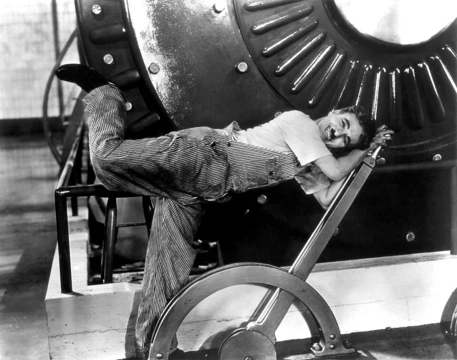
Chaplin's factory sequence in Modern Times (1936) and Keaton's train-chase finale in The General (1926) are regularly analysed in film schools as masterclasses in physical timing. In live performance, the Fratellini brothers' 1960s circus numbers and Michael Smollin's acclaimed solo shows at the Edinburgh Festival Fringe are often cited as benchmark examples.
What does 'the look' mean in clown vocabulary?
'The look' is a sustained, often exaggerated gaze directed at the audience or at one's own failed attempt, held just long enough for the spectator to register the absurdity. It functions as the clown's primary silent tool for creating a shared moment of recognition between performer and audience.